



AIGI Environmental Inc.
AIGI 26MSC Multi-Silicone-Core General-Service Packing
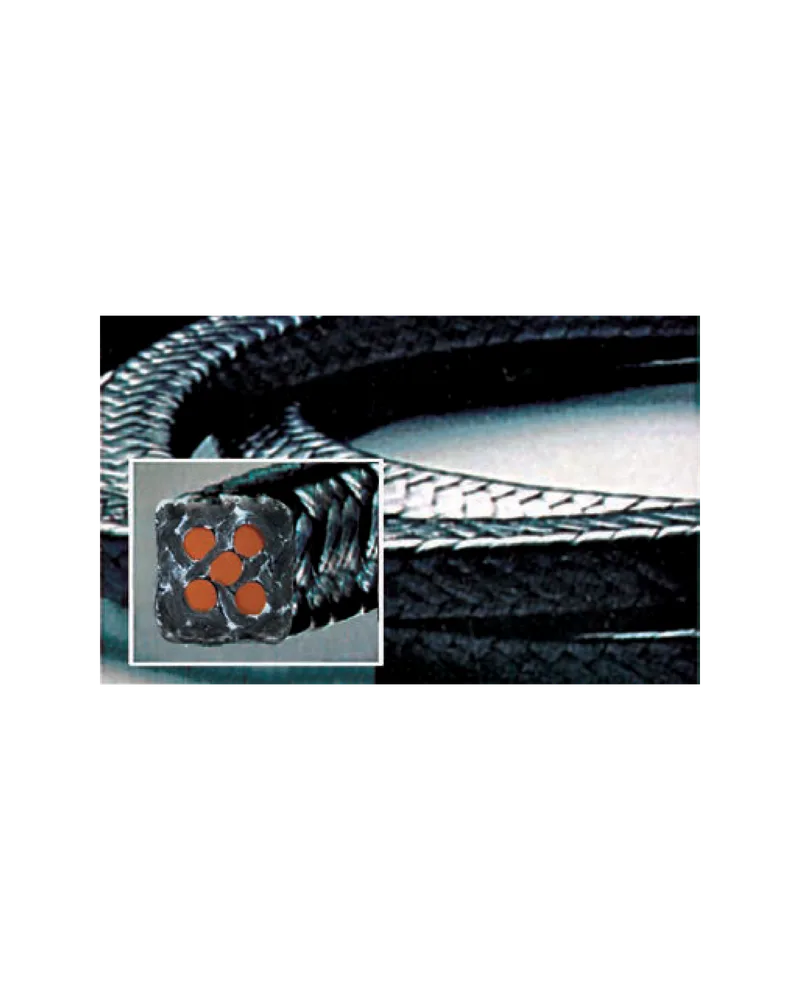
AIGI 26MSC is the dense, graphite-coated PTFE pump packing AIGI 26, upgraded with multiple resilient silicone-rubber cores. The elastic cores give the braid superior memory, so it keeps a tight seal even under severe radial shaft motion and vibration. It is built for pumps, mixers and agitators where extreme runout defeats ordinary packing.
Product Benefits
- Resists permanent set: On equipment with heavy shaft runout, standard packing is compressed on one side and unloaded on the other with every revolution, and it soon takes a permanent set.
- Cores spring the braid back: The multiple silicone cores in AIGI 26MSC continually spring the braid back against the shaft, maintaining excellent leakage control with minimal gland adjustment.
- Longer maintenance intervals: Maintenance intervals stretch out and the shaft sleeve suffers less.
- AIGI 26 virtues retained: It keeps everything that makes AIGI 26 attractive: dense low-friction construction, graphite-assisted heat dissipation, and long service life.
Where It's Used
- Extreme radial runout: Typical homes for this packing are pumps, mixers and agitators where extreme radial runout exists.
- Overhung and worn shafts: Long overhung agitator shafts and worn or side-loaded pump shafts are classic examples.
- Orbiting shafts: It suits anywhere the shaft visibly orbits inside the stuffing box.
Good to Know
- Top of the family: AIGI 26MSC sits at the top of a small family: AIGI 26 is the plain dense braid, AIGI 26SC adds a single silicone core, and 26MSC adds multiple cores for the most severe motion.
- Choose by actual runout: Choosing within the family is mainly a question of how much runout the equipment actually shows.
- Black and heat tolerant: The packing is black from its graphite content and withstands high service temperatures.
- Wide chemical range: Its chemical range is wide but slightly narrower than plain AIGI 26, since the silicone cores should be kept away from the strongest acids and alkalis.