



ITT Engineered Valves
Cam-Tite Compact Actuator
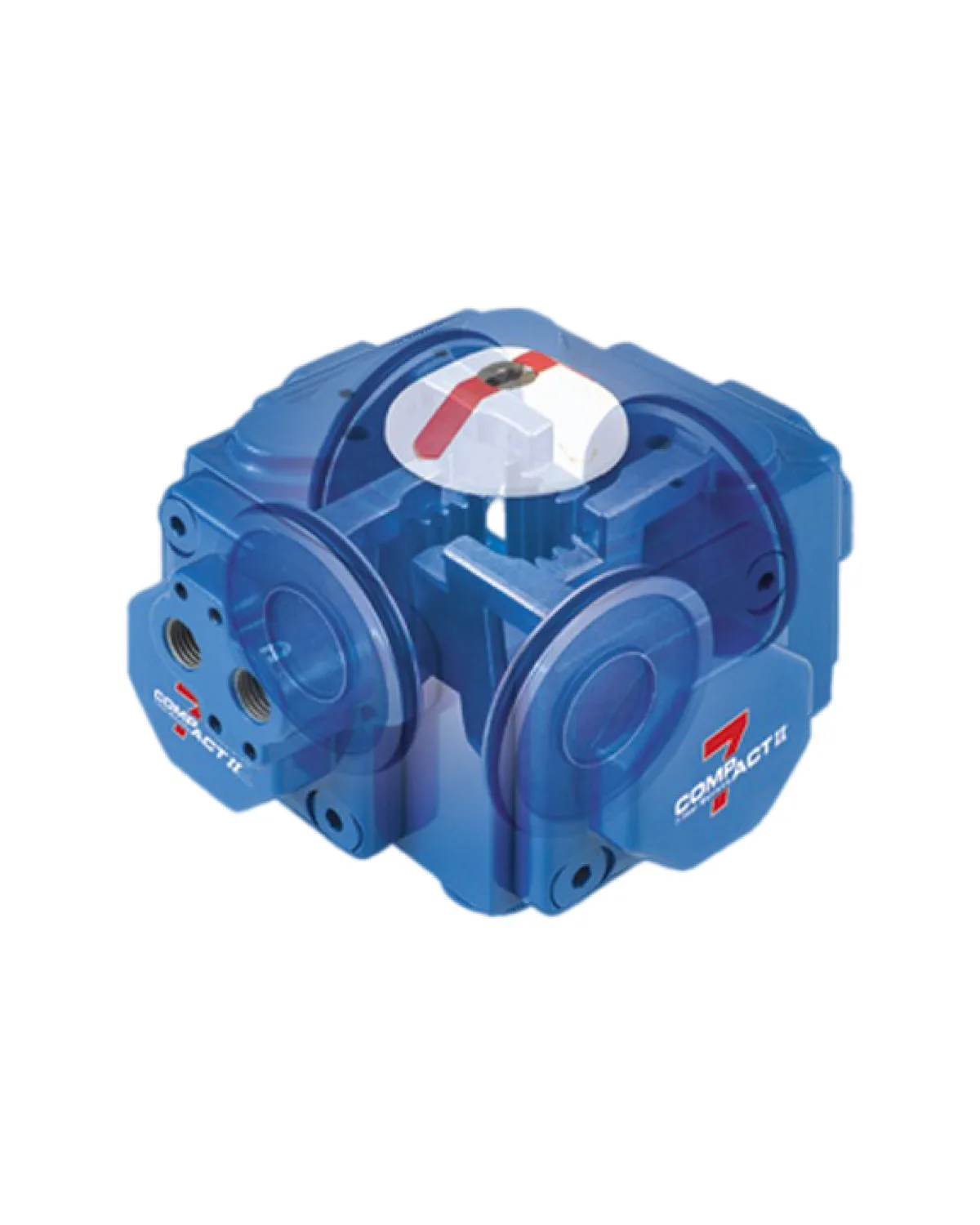
The Cam-Tite Compact Actuator is a rack-and-pinion pneumatic actuator matched to the low-torque Cam-Tite ball valve. Offered in double-acting and spring-return configurations, it provides a straightforward, economical way to automate on/off isolation valves.
Product Benefits
- Smaller actuator needed: Because the Cam-Tite valve operates at inherently low torque, it can be driven by a smaller, lighter actuator than a conventional ball valve of the same size.
- Compact, lower cost: That keeps the automated package compact and its cost down.
- Assembled and tested: Every actuator package is completely assembled and tested by Engineered Valves before shipment, so the valve and actuator arrive matched and ready to install.
- Sized with margin: Factory sizing already includes a safety margin, taking the guesswork out of pairing actuator to valve.
- Extra margin for tough media: For demanding media such as gases, viscous liquids or crystallizing fluids, a larger margin is applied so the actuator retains authority as operating torque rises.
Where It's Used
- On/off isolation duty: The Compact actuator automates Cam-Tite ball valves in on/off isolation service across a broad span of line sizes and pressure classes.
- Ordinary plant air: It runs on plant air at common supply pressures, and spring-return versions provide a fail-safe position on loss of air.
- All seat and seal options: It covers the full range of Cam-Tite seats and seals, from standard PTFE and reinforced PTFE through PEEK grades, UHMW polyethylene and fire-safe constructions.
- One approach, many services: That breadth means a single actuation approach serves many different services.
Good to Know
- Mounting for serviceability: On flanged valves the actuator lands on integral flange pads, while socket-weld, threaded and buttweld valves have their cover bolts replaced with studs and double nuts.
- Seal stays undisturbed: In either case the actuator can be removed without disturbing the body/cover seal.
- Field mounting rules: Use flange-pad mounting or properly machined studs rather than threaded rod, and replace the cover gasket if the bonnet has been loosened.
- Remove the stop pin: On the larger valve sizes, remove the rotational stop pin during field mounting.
- Respect stem torque: When sizing any power actuator, never exceed the valve's maximum allowable stem torque.