




ITT Engineered Valves
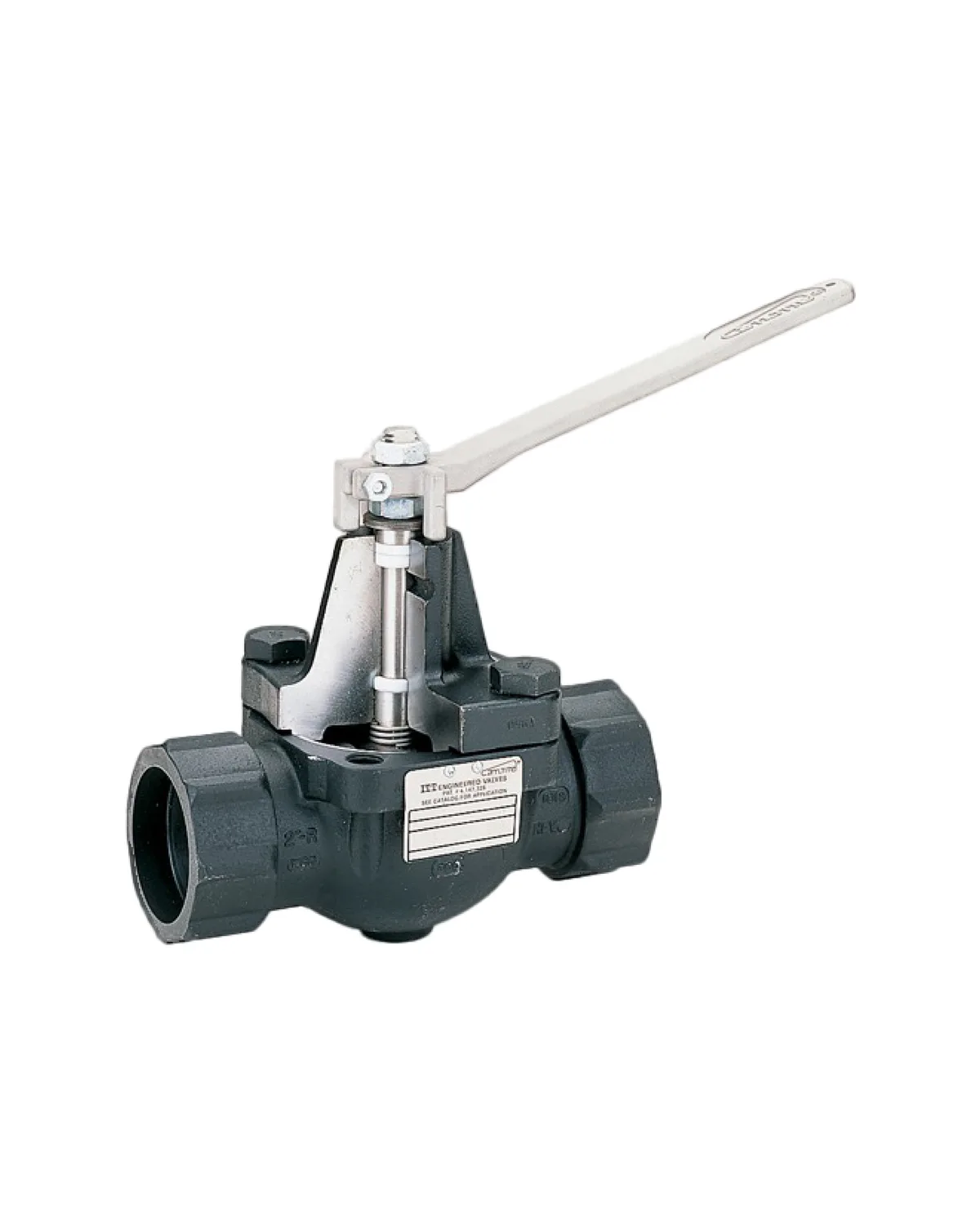
Cam-Tite Extended Bonnet
The Cam-Tite Extended Bonnet is a bonnet option for the Cam-Tite ball valve that raises the stem seal well away from the flowing media. It is intended for higher-temperature and semi-cryogenic services, and it lets the valve be fully insulated without the hand lever getting in the way.
Product Benefits
- Seals live longer: Stem seals last longest when they are kept away from temperature extremes.
- Sealing in a milder zone: By moving the seal further from the process fluid, the extended bonnet lets the sealing components work in a milder zone, protecting performance in services that run notably hot or cold.
- Insulate without obstruction: The valve body can be wrapped in insulation without interfering with the hand lever.
- Adjust through the lagging: The packing nut extends beyond the insulation, so the stem seal can be adjusted without stripping the lagging.
- Supported stem: The stem itself is supported to minimize galling and stem leakage.
Where It's Used
- Hot and semi-cryogenic: Extended bonnets appear on Cam-Tite valves in higher-temperature process lines and in semi-cryogenic duty.
- Insulated pipework: These are services where the pipe is typically insulated and a standard bonnet would place the stem seal too close to the thermal extremes of the media.
- In-place seal adjustment: They fit naturally wherever insulated isolation valves need periodic stem-seal adjustment in place, since the adjustment point stays accessible outside the insulation.
Good to Know
- Interchangeable bonnet: The extended bonnet is interchangeable with the standard bonnet, so an existing Cam-Tite valve can be upgraded when a service becomes hotter, colder or newly insulated.
- Shared modularity: This modularity is shared across the Cam-Tite bonnet family.
- Seat material matters too: Virgin PTFE and reinforced PTFE cover a broad span from cold to hot duty, PEEK grades extend the upper end, and UHMW polyethylene has a more modest practical temperature limit.
- Match the real service: Select the seat material for the actual service temperature rather than for the bonnet alone.