




ITT Engineered Valves
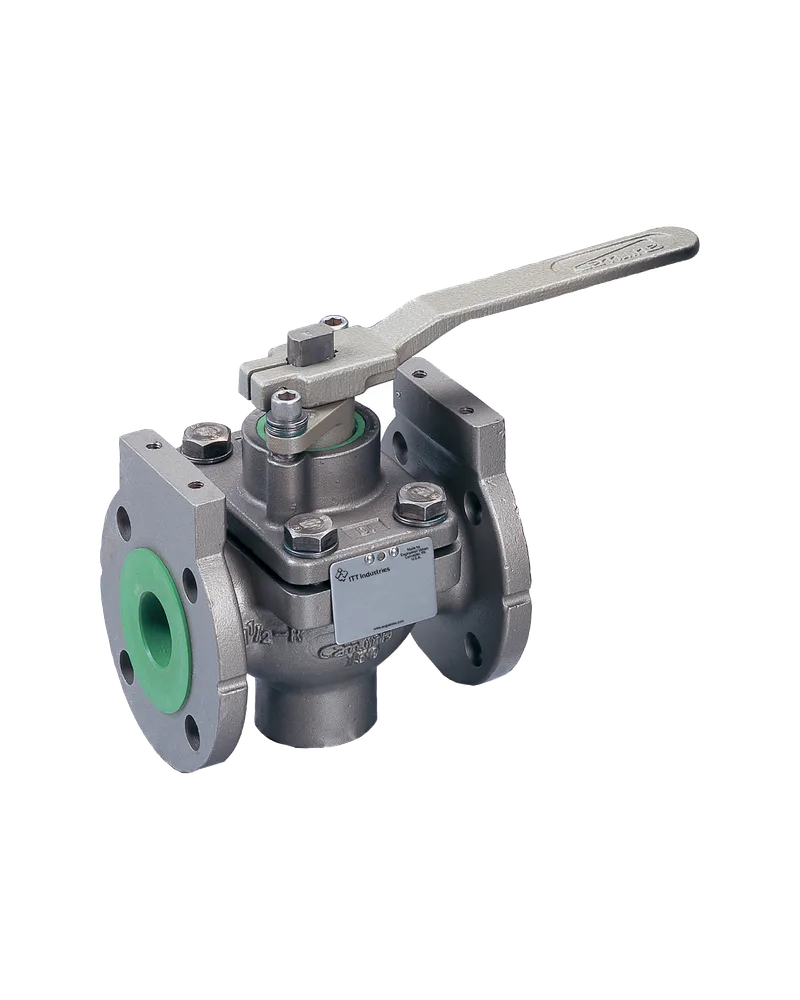
Cam-Tite Top Entry Metal Ball Valve
The Cam-Tite is a top-entry metal ball valve engineered for severe chemical service, where conventional ball valves suffer from high operating torque and stem leakage. Its patented non-spherical, beveled-edge ball mechanically compresses both the upstream and downstream seats, so it seals tightly regardless of line pressure.
Product Benefits
- Seats energized by the ball: Because the ball itself energizes the seats, shut-off does not depend on line pressure.
- Reliable in low-pressure lines: That is a real advantage where floating-ball designs can weep.
- Body cavity isolated: Sealing on both seats at once also helps keep the body cavity isolated from the process.
- Live-loaded blow-out-proof stem: The stem is live loaded with Belleville springs and sees minimal lateral loading, which keeps fugitive emissions down and stem maintenance infrequent.
- Built for emissions targets: For plants chasing emissions performance on hazardous media, that stem design is a key differentiator.
Where It's Used
- The most aggressive media: It is specified for some of the toughest fluids in the chemical industry, including dry chlorine, anhydrous hydrogen fluoride, phosgene and oxygen.
- Severe corrosive service: More broadly, it suits severe corrosive duties that call for a soft-seated quarter-turn valve.
- High cycle counts: Those duties demand that the valve stay tight over many operating cycles.
Good to Know
- Broad material range: Bodies and trim come in carbon steel, stainless steels, Alloy 20, Monel, Hastelloy and titanium, so the valve can be matched to the corrosion mechanism at hand.
- Seats by temperature zone: Seat choices span virgin and reinforced PTFE, UHMW polyethylene and PEEK, each with its own temperature comfort zone.
- Firesafe option: A firesafe reinforced-PTFE seat option is available.
- Serviced in line: The top-entry construction allows the internals to be serviced without pulling the valve from the line.
- Seat drives the envelope: As with any severe-service ball valve, the seat material chosen determines both the usable temperature range and the required operating torque.