



ITT Engineered Valves
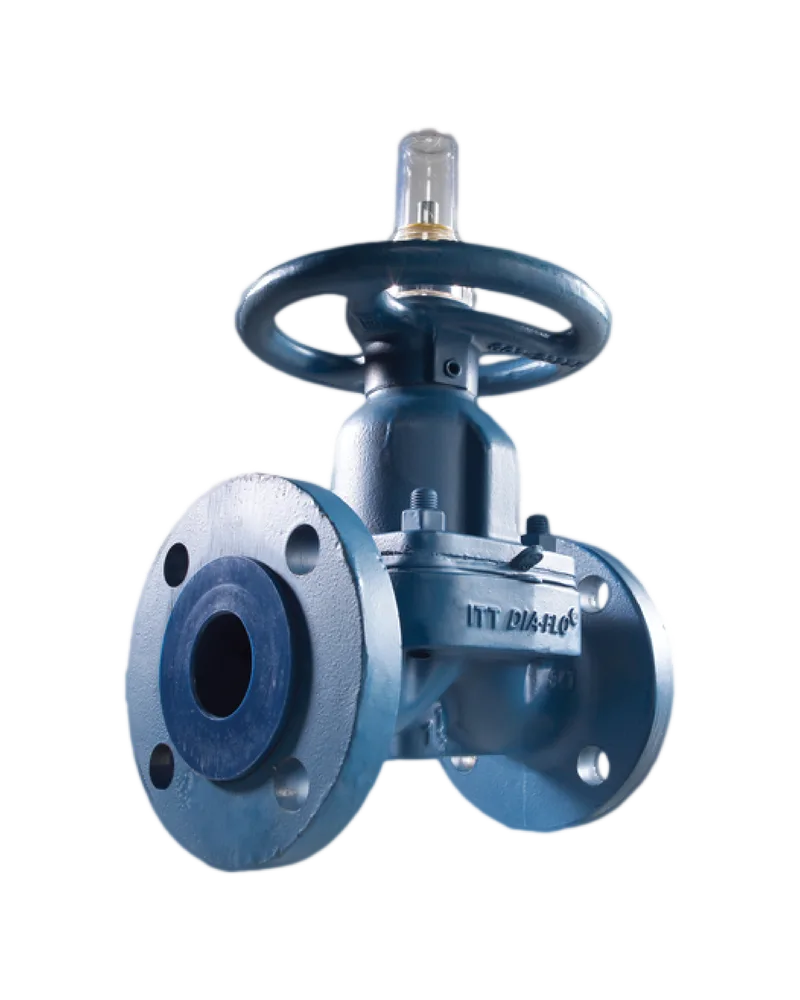
Dia-Flo Weir Diaphragm Valve
The Dia-Flo weir diaphragm valve closes a flexible diaphragm against a raised weir, giving bubble-tight shut-off with no packing gland anywhere in the design. It is a long-standing industrial answer for corrosive, erosive and solids-laden fluids that punish conventional valves.
Product Benefits
- No stem packing to leak: The diaphragm completely isolates the bonnet mechanism from the process, so there is no stem packing to leak and no metal trim exposed to corrosion.
- Bubble-tight shut-off: Closure is bubble-tight per the MSS diaphragm-valve standard.
- Secondary containment: A sealed bonnet with a leak-detection port provides a second line of defence.
- Linings for any chemistry: Bodies are available from unlined metal through rubber-lined, plastic-lined, solid plastic and glass-lined.
- Cheaper than exotic alloys: One valve type can therefore be tailored to almost any corrosive chemistry, often at lower cost than exotic alloy trim.
Where It's Used
- Aggressive process fluids: Typical services include acids, caustics, high-purity chemicals and agricultural chemicals.
- Plant systems: Demineralizer systems, plastics manufacturing and flue gas desulfurization are common duties.
- Industries served: Chemical, pharmaceutical, nuclear and fossil power, water treatment and mining all use it.
- Nuclear-class construction: Construction carrying the ASME Section III N-stamp is available.
Good to Know
- Diaphragm is the spec: Diaphragm selection is the heart of the specification.
- Elastomer grades: A wide set of elastomer grades covers general and abrasive duty.
- Two-piece PTFE option: A two-piece PTFE diaphragm with an elastomer backing cushion handles aggressive chemistry.
- FDA-compliant materials: FDA-compliant body and diaphragm materials are available for clean-fluid duty.
- Easy to automate later: End connections span threaded, flanged and welded styles, and the same bodies accept handwheel bonnets or pneumatic actuators with an adjustable travel stop, which makes later automation of manual valves straightforward.