



SLV
Double Eccentric Butterfly Valve
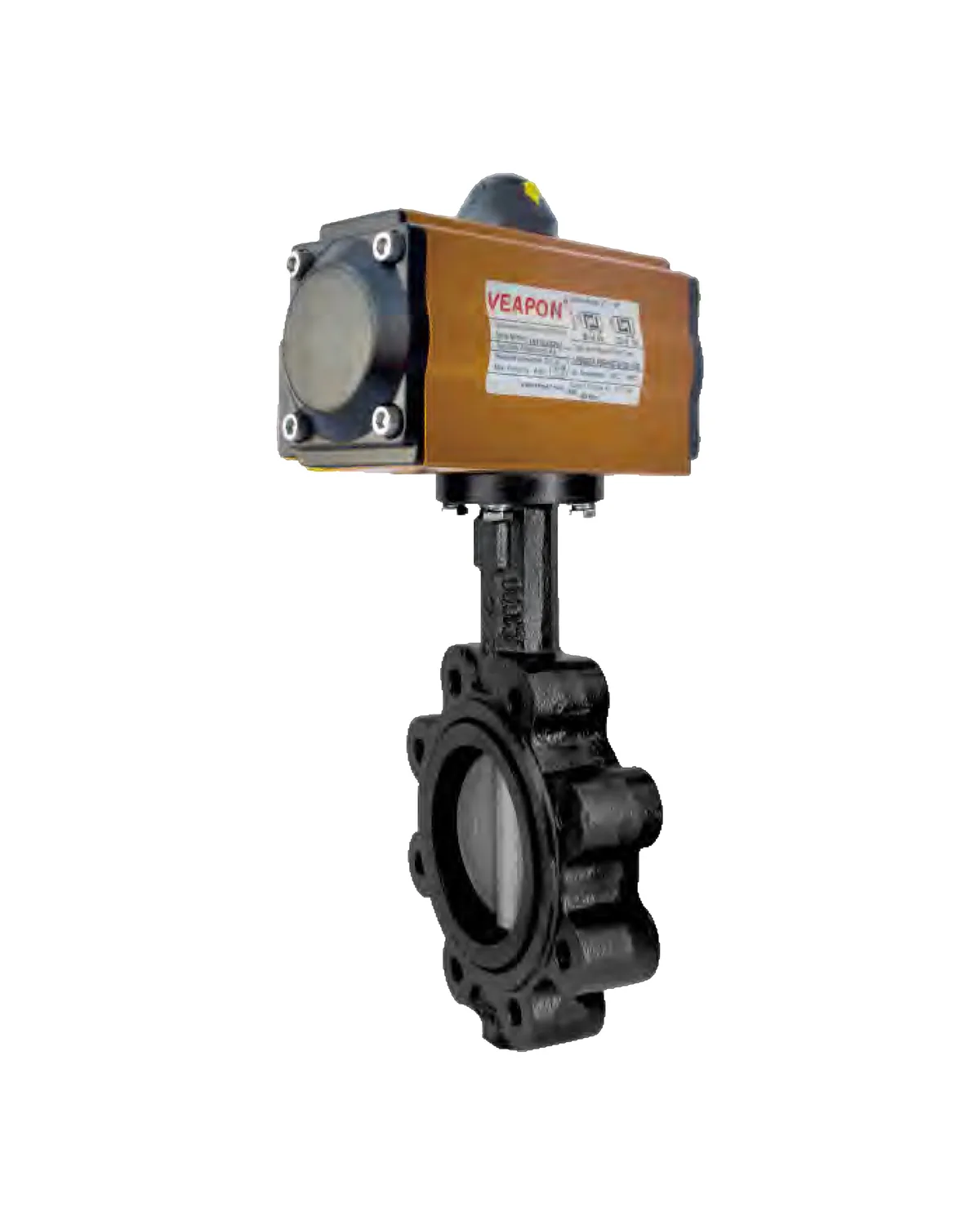
The SLV Double Eccentric Butterfly Valve is a high-performance, double-offset design whose disc cams away from the seat as it opens. That geometry cuts seat friction and wear, giving tight bidirectional shutoff and long life at higher pressures and temperatures than a concentric valve can handle.
Product Benefits
- Disc lifts off the seat: In a concentric butterfly valve the disc rubs the seat through its whole travel; in this double-offset design the disc lifts clear of the floating seat almost as soon as it starts to move.
- Less wear, lower torque: Less rubbing means less wear, lower operating torque and a valve that keeps sealing tightly even under frequent cycling.
- Bidirectional zero leakage: The result is zero-leakage shutoff in both flow directions.
- Hotter, higher-pressure duty: The service envelope reaches well beyond resilient-seated valves, into hotter and higher-pressure duties where an ordinary butterfly valve would give up its seat quickly.
- Durable middle ground: For positions that both isolate and regulate, it sits between economy butterfly valves and heavier ball or globe valves.
Where It's Used
- High-frequency cycling: Its calling card is shut-off and regulation duty on process lines that cycle often.
- Bidirectional headers: Headers that must seal reliably in either direction are well served.
- Beyond elastomer seats: Hotter services outside elastomer-seat territory remain within its range.
- Wafer, flanged and lug: Three body styles let it suit through-lines as well as end-of-line positions.
- Manual or automated: Drive options span handles and handwheels through pneumatic, electric and hydraulic actuators, so the same valve serves manual isolation points and fully automated control loops alike.
Good to Know
- Body and disc materials: Bodies and discs come in carbon steel and several stainless grades.
- Stem materials: Stems are available in stainless and high-strength precipitation-hardened alloys.
- Seat choices: Options run from PTFE-based polymers through engineering plastics to a laminated stainless-and-graphite construction; the polymer seats favour tightness at moderate temperatures, while the laminated seat carries the valve into its hottest duties.
- Tested to standards: Strength and shell testing follow widely used international valve standards, and the actuator mounting interface is standardised for straightforward automation.
- State the duty: When specifying, give the flow direction and say whether the position is dead-end service, so the seat and body style can be matched correctly.